


The Project
The Maddening Mercy is a part visual-novel, part bullet-hell detective game. Step into the shoes of Mercy Allison, a marshal for the peacekeeping Long Arm Gang, as she investigates a murder in the small town of Toothwood. Gather clues and talk to characters in visual-novel Investigations, before using those clues to break through suspects' arguments in bullet-hell Confrontation action segments.

What I Did
I served as the team's game design and narrative lead.
-
Designed a core game loop of investigation and bullet-hell combat
-
Maintained and merged gameplay and narrative design disciplines
-
Wrote and maintained the game design document, narrative design document, and script
-
Implemented visual-novel scenes in engine using custom tools
What I Learned
-
A sprint-based production pipeline and efficient task tracking methods
-
How to write conversation-heavy dialogue that engages the reader
-
Ways to increase narrative engagement through UX implementation and "reward-based" dialogue pacing
Narrative Design
Narrative Systems
I took inspiration from visual-novels such as Ace Attorney and Danganronpa, designing the basis for a game where the objective is to find contradictions in statements and break through them with evidence. To reflect and highlight those moments of "breaking through arguments with evidence", I pitched the design that the moments of contradiction would resemble shooting through a shield, and that this moment would be preceded by a bullet-hell section so that the moment of contradiction acts like a reward. This created the main game loop: talk to NPCs, collect evidence, and engage in a battle where the findings culminate.

A whiteboard diagram of the core gameplay loop. Gameplay is split between Investigation segments in visual-novel style, and Confrontations in bullet-hell style.
Mystery and Story Progression
I wrote the game's central murder mystery in three parts: the setup, the murder, and the cover up. To keep scope down and limit the number of art assets we needed to make, the mystery relied on the characters hiding information rather than complex scenarios and crime scenes.

A story diagram detailing the key questions of each chapter.
The first iteration of the overall story was planned for three chapters, each focusing on a different character. We realized the pacing was a little awkward and made things a bit rushed reveal-wise.
The second iteration was planned around 5 chapters, each focused on answering key questions related to the mystery. This allowed the chapter content to be better paced and have greater balance between investigation and combat.
The chapter restructuring was also influenced by art deficits. I rewrote the story to focus on characters we had more polished assets for (those being Bill and Loralei).
Characters and Dialogue
All characters were given in-depth bios that broke down many different appearance and personality traits to give me and the other writers a greater idea of character voice. All characters had certain secrets and traits with the aim of making them less 1-dimensional. The characters all have angles of themselves they hide behind masks, fitting the detective mystery genre.
I wrote all of the dialogue for chapter 1. In chapter 2, I wrote about a third of the dialogue, and collaborated with the other writers to do editing passes on their work to ensure character voice and quality consistency.
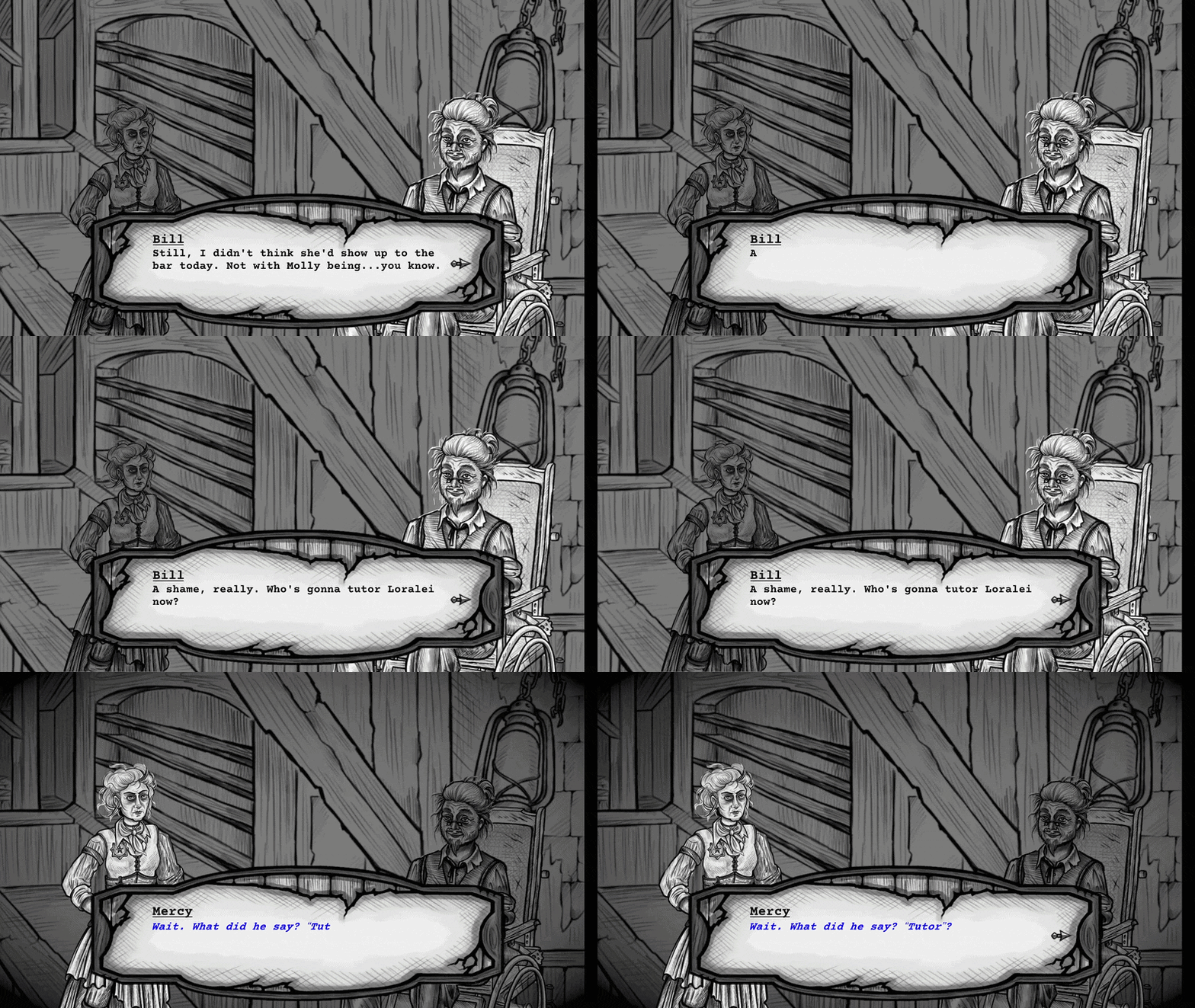
Narrative UX
Playtesting revealed that some players weren't engaging with the visual-novel segments of the game. To make them more engaged and pay attention to character dialogue (the core plot vehicle), we experimented with dialogue feedback such as screen flashes, screen shake, sprite pulses, and sound effects. I helped implement this feedback at key moments, using different feedback elements to alter the feel of dialogue delivery.
Reflection
This was a project that I got to flex my game design and writing skills on. As design and narrative lead, I was in a position where I had to consider how the narrative reflected the mechanics. It didn't matter how good the story was if the gameplay wasn't fun.
The project was informed a lot by what the team members wanted to work on. The desire to highlight the art assets and scope for a greater amount of writing determined the type of game we ended up making. I'm very proud that the game design allowed for each team member's talents to shine.